
Chimney inspection
We assess on site whether chimney systems comply with the relevant standards, are compatible with gas appliances and are fit for safe operation.
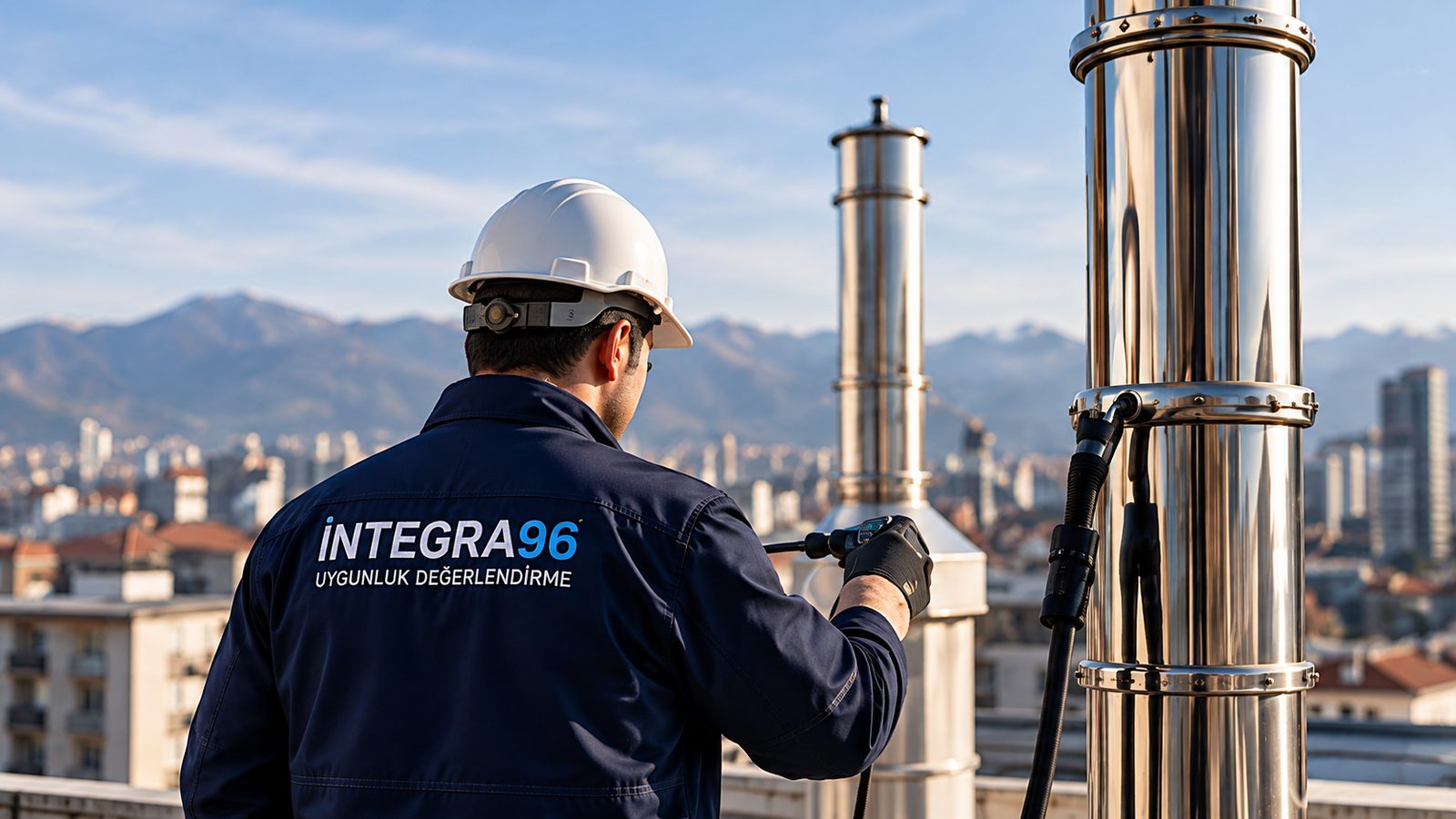
Scope
The three types of chimney inspection within our scope of accreditation:
| Inspection type | Content |
|---|---|
| Periodic inspection | Inspection at regular intervals of a chimney in use with regard to operational safety and performance |
| Tightness test | Verification by testing that the chimney system complies with its declared tightness class (N, P or H) |
| Design and installation conformity inspection | Conformity of the chimney design, calculations and completed installation with the design and the standard |
Basis: TS EN 15287-1, TS EN 15287-2, TS EN 13384-1+A1, TS EN 13384-2+A1, TS 7363. Current versions are confirmed from our list of inspection methods.
What is examined during the inspection?
- Chimney identification: class, material, cross-section, height; CE marking and declaration of performance
- Structural condition: corrosion, cracks, deformation, joints, hangers and supports
- Narrowing of the cross-section, soot, residues or foreign objects
- Measurement of chimney draught and comparison with the value in the standard
- Condensate drainage; cleaning and inspection openings
- Appliance connections: slope, length, tightness
- Chimney outlet: height above the roof, distance to neighbouring buildings, cowl
- Combustion air and ventilation; flue gas measurement where necessary (CO, CO₂, temperature)
Preparation before applying
The following must be ready for the inspection to proceed smoothly:
- Access to chimney cleaning and inspection openings
- Safe access to the roof
- Chimney design and calculations (for design and installation inspection)
- Basic information on the appliances connected to the chimney and the site address
Chimneys to which safe access cannot be provided are not inspected; this is stated in the report as a limitation of scope. If preparations are not complete, the inspection is postponed.
Process
Application
Your request is received and the scope is defined.
Planning
The date, team and preparations are communicated to you.
On-site inspection
Our inspector carries out the inspection.
Reporting
The results are reported.
Frequently asked questions
It is requested for reasons such as a legal requirement, a request from the gas distribution company, periodic checks or verification of the conformity of a new installation. You can select the reason in the application form.
The chimney system is isolated as defined in the standard, the test pressure corresponding to its tightness class is applied and the leakage rate is measured. The result is compared with the limit value, taking measurement uncertainty into account.
Nonconformities are stated in the report and notified to you in writing. Verification that they have been corrected is planned as a separate follow-up inspection. We do not propose design solutions for correcting deficiencies, as this would constitute consultancy.
The duration depends on the number of chimneys, the type of inspection and the access conditions. It is communicated to you at the planning stage.